
How Coiled Spring Pin Design Affects Strength and Flexibility
When selecting fastening components for mechanical assemblies, engineers often need to balance two requirements: load capacity and flexibility. A coiled spring pin is designed around this balance. Its spiral-layer structure allows the pin to maintain joint retention while absorbing movement caused by vibration, impact, and repeated loading.
Unlike rigid fastening elements that transfer most external force directly to connected parts, coiled spring pins use controlled elastic deformation to manage changing loads. The design details, including coil layers, material thickness, diameter, and hardness, directly influence how the pin behaves inside an assembly.
How Coil Layers Control Stress Distribution
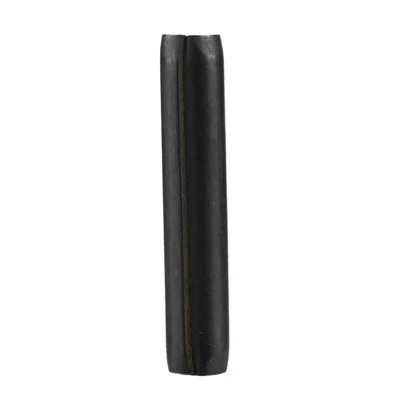
The multi-layer spiral structure is the key design feature of a coiled spring pin. During installation, the pin is compressed into the mounting hole, causing the layers to move slightly relative to each other.
This movement creates several mechanical effects:
- Stress is distributed across multiple layers instead of one concentrated area
- The pin can absorb repeated impact without immediately transferring all force to the hole wall
- The contact pressure remains more consistent during vibration
In applications such as gear assemblies or mechanical linkages, the load on the pin is rarely constant. Acceleration, stopping, and directional changes create repeated shear forces. The coiled structure allows the pin to adjust under these changing conditions.
The Relationship Between Pin Thickness and Flexibility
The thickness of the steel strip used to form a coiled spring pin directly affects its mechanical behavior.
A thicker strip increases:
- Resistance against shear force
- Compression strength
- Ability to handle heavier loads
However, increasing thickness also reduces the amount of elastic movement available.
For example, a coiled spring pin installed in a heavy machine joint may require a thicker wall design because the connection experiences impact loading. In contrast, a pin used in a precision mechanism with frequent movement may require more flexibility to reduce stress transferred to surrounding components.
Therefore, selecting a coiled spring pin is not simply about choosing the strongest option. The design must match the actual load condition.
How Diameter Affects Retention Force
The outside diameter of a coiled spring pin determines the amount of compression between the pin and the installation hole.
During assembly:
- The pin is inserted into a smaller hole than its free diameter.
- The coil structure compresses inward.
- The outer surface creates radial contact force.
- Friction prevents movement between connected components.
A larger diameter generally increases contact force, but excessive interference can increase installation pressure and damage the surrounding material.
For this reason, engineers consider:
- Hole diameter tolerance
- Base material hardness
- Required retention force
- Installation method
when selecting industrial pins for a specific assembly.
Material Selection Determines Fatigue Behavior
Coiled spring pins are commonly manufactured from spring steel because the material must repeatedly deform and recover during operation.
Common material options include:
Carbon Spring Steel
Carbon spring steel is used in general mechanical applications where the assembly experiences repeated vibration and normal operating loads.
Stainless Steel
Stainless steel coiled spring pins are selected for environments involving moisture, outdoor exposure, or corrosive conditions.
Material selection affects:
- Elastic recovery after compression
- Resistance to fatigue cracking
- Long-term dimensional stability
A pin that operates in a high-cycle environment requires different material characteristics compared with one used in a static assembly.
Performance Under Vibration and Impact Loading
Many mechanical joints experience dynamic forces rather than simple static loads. Examples include rotating equipment, vehicle systems, and industrial machines.
During vibration:
- The pin body compresses slightly
- The coil layers absorb mechanical movement
- The stored elastic force maintains contact with the hole wall
This behavior reduces sudden stress transfer between assembled parts.
In rotating systems such as shafts and couplings, torque changes can create repeated shear loads. A properly selected coiled spring pin helps maintain the connection while allowing limited elastic movement.
Why Coiled Spring Pins Are Used in High-Cycle Assemblies
A high-cycle assembly is one that experiences thousands or millions of repeated movements during its service period.
Examples include:
- Automated machinery
- Transmission components
- Actuator mechanisms
- Industrial equipment joints
In these applications, a fastening component must handle repeated loading without losing its holding force.
The layered coil structure allows gradual stress distribution during each loading cycle. This reduces the possibility of concentrated stress points that may accelerate fatigue damage.
Installation Conditions Affect Actual Performance
Even with the correct pin design, installation conditions directly influence performance.
Important factors include:
Hole Preparation
The hole must maintain proper diameter and surface condition. Burrs or irregular surfaces can damage the pin during insertion.
Insertion Force
Excessive installation force may permanently deform the pin. Insufficient compression may result in reduced retention.
Base Material
The surrounding component material affects how the joint behaves. For example, aluminum housings may require different pin selection compared with hardened steel components because softer materials can wear faster.
Selecting the Right Coiled Spring Pin Design
Engineers usually evaluate several conditions before selecting a coiled spring pin:
- Is the load static or cyclic?
- Does the assembly experience vibration or impact?
- How often will the parts be assembled and removed?
- What material is used for the mating components?
- What temperature and environmental conditions exist?
For a low-vibration assembly, a standard coiled spring pin may provide sufficient retention. For heavy machinery exposed to shock loads, a different diameter, material grade, or wall thickness may be required.
Application Examples in Industrial Assembly
Coiled spring pins are used in mechanical systems where controlled flexibility is required.
Typical applications include:
Automotive Components
Used in transmission parts, steering mechanisms, and mechanical linkages where vibration and repeated movement occur.
Industrial Machinery
Installed in gears, shafts, and couplings to transfer shear force while allowing limited elastic movement.
Automation Equipment
Used in fixtures and moving mechanisms where repeated operation requires stable fastening performance.
The selection of pin design directly affects assembly life, maintenance requirements, and mechanical stability.
CHN-PINS manufactures industrial fastening components including Coiled Spring Pins, Tooth Spring Pins, Slotted Pins, Dowel Pins, Compression Limiters, Washers, and Retaining Rings for mechanical assembly applications.
The performance of a coiled spring pin depends not only on material strength but also on how its structure manages deformation, load distribution, and repeated movement inside the assembly.