
Slotted Spring Pins vs Coiled Spring Pins: What Are the Differences?
Spring pins are mechanical fastening components designed to secure parts through elastic deformation. In industrial assembly systems, two common types are slotted spring pins and coiled spring pins. Although both use spring force to maintain contact inside a hole, their structures, load behavior, fatigue resistance, and application conditions are different.
For engineers and purchasing teams, selecting the correct spring pin depends on factors such as vibration level, impact load, assembly frequency, base material, and required service life.
Structural Difference Between Slotted Spring Pins and Coiled Spring Pins
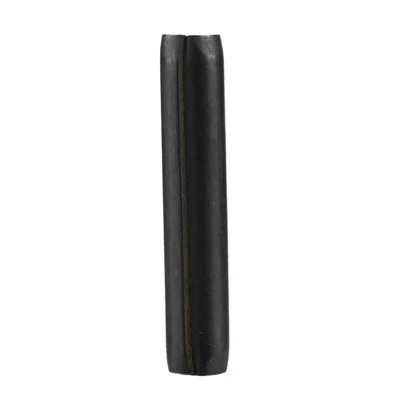
A slotted spring pin is manufactured from a flat strip of spring steel rolled into a cylindrical shape with a single longitudinal slot along the body. The slot allows the pin diameter to compress during installation and expand after insertion.
A coiled spring pin is produced by rolling multiple layers of spring steel strip into a spiral structure. Instead of one open slot, the pin contains several layers of material that work together during compression.
The main structural difference is:
Slotted spring pin: single-layer cylinder with one slot
Coiled spring pin: multi-layer spiral structure
This difference directly affects how each pin responds to vibration, shock, and repeated loading.
Working Principle of Slotted Spring Pins
Slotted spring pins operate through radial expansion force. During installation, the pin is compressed into a hole smaller than its free diameter. After insertion, the slot allows the pin to expand outward and maintain contact pressure against the hole wall.
The working process includes:
- Pin diameter reduces during insertion
- Outer surface contacts the hole wall
- Spring force creates friction retention
- The joint remains fixed under mechanical movement
Slotted spring pins are commonly selected for general mechanical assemblies where moderate vibration and positioning requirements exist.
Typical applications include:
- Machine housings
- Brackets
- Handles and levers
- Automotive mechanical connections
- General industrial equipment
Working Principle of Coiled Spring Pins
Coiled spring pins use a multi-layer spiral structure to distribute stress during compression. When external force is applied, the layers move slightly against each other, allowing the pin to absorb energy through controlled deformation.
Compared with slotted spring pins, coiled spring pins provide more uniform flexibility because stress is distributed across multiple material layers.
Their structure allows them to handle:
- Repeated impact loads
- Cyclic vibration
- Frequent assembly movement
Common applications include:
- Gear assemblies
- Shafts and couplings
- Heavy machinery joints
- Automotive transmission components
Material Selection and Manufacturing Process
Both slotted spring pins and coiled spring pins are commonly manufactured from spring steel materials because the pin body must repeatedly deform and recover without permanent bending.
Common materials include:
- Carbon spring steel for standard industrial applications
- Stainless steel 301 / 302 for corrosion-sensitive environments
The manufacturing process usually includes:
- Steel strip preparation
- Rolling or coiling process
- Heat treatment for spring properties
- Surface treatment for corrosion protection
Surface finishes may include zinc plating, phosphate coating, or other protective treatments depending on the operating environment.
Differences in Load and Vibration Performance
The main difference between slotted spring pins and coiled spring pins appears under dynamic loading conditions.
Slotted Spring Pins
Slotted spring pins are suitable for applications with:
- Moderate vibration
- Limited impact loading
- Standard assembly requirements
Because the structure contains one slot, stress concentration can occur around the slot edges when the pin experiences repeated high-impact cycles.
Coiled Spring Pins
Coiled spring pins are designed for applications involving:
- Continuous vibration
- Repeated shock loads
- Frequent load changes
The spiral structure distributes stress across multiple layers, reducing stress concentration during repeated compression cycles.
For example, in rotating machinery operating thousands of cycles per day, coiled spring pins can better accommodate repeated mechanical movement.
Installation Requirements and Hole Design
The installation method for both pin types depends on hole diameter, base material, and required retention force.
For slotted spring pins:
- Standard drilled holes are commonly acceptable
- The slot provides tolerance compensation
- Installation requires controlled insertion force
For coiled spring pins:
- Hole size must match the recommended specification
- Installation force depends on pin diameter and material thickness
- Correct hole preparation prevents excessive deformation
In both cases, burr removal is important because sharp edges inside the hole can damage the pin surface during insertion.
Application Comparison in Industrial Systems
Different mechanical environments require different spring pin structures.
Automotive Components
Automotive systems experience vibration from engines, transmissions, and road conditions.
Slotted spring pins may be used in:
- Interior mechanisms
- Brackets
- Medium-load connections
Coiled spring pins are commonly selected for:
- Transmission components
- Rotating assemblies
- Shock-loaded joints
Industrial Machinery
Industrial equipment often operates continuously with repeated movement.
Slotted spring pins are suitable for:
Covers
Positioning parts
Assembly connections
Coiled spring pins are more suitable for:
Gear mechanisms
Drive systems
High-cycle mechanical joints
How to Select Between Slotted Spring Pins and Coiled Spring Pins
When selecting spring pins, engineers usually evaluate:
1. Load Type
Static load applications can often use slotted spring pins.
Dynamic loads involving vibration and impact generally require coiled spring pins.
2. Assembly Frequency
For components that require frequent maintenance, the elastic structure of coiled spring pins can reduce stress during repeated installation.
3. Base Material
For softer materials such as aluminum or plastic components, the pin design must prevent excessive hole deformation.
4. Operating Environment
Temperature variation, moisture, and chemical exposure influence material selection and surface treatment requirements.
OEM Spring Pin Manufacturing Requirements
For OEM applications, spring pin selection is based on engineering drawings, assembly conditions, and mechanical requirements.
A professional slotted spring pins manufacturer and coiled spring pins supplier should provide:
- Customized diameter and length
- Spring steel and stainless steel material options
- Surface treatment selection
- Dimensional inspection according to drawings
CHN-PINS manufactures industrial fastening components including Dowel Pins, Slotted Pins, Spring Pins, Coiled Spring Pins, Compression Limiters, Washers, and Retaining Rings for mechanical assembly applications.
The correct spring pin design helps engineers control joint movement, vibration response, and assembly performance in machinery, automotive components, and industrial equipment.