
How to Choose the Right Slotted Pins for Industrial Applications
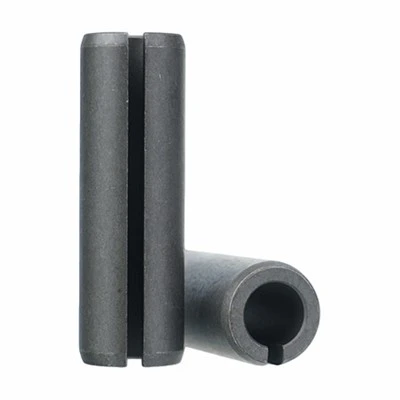
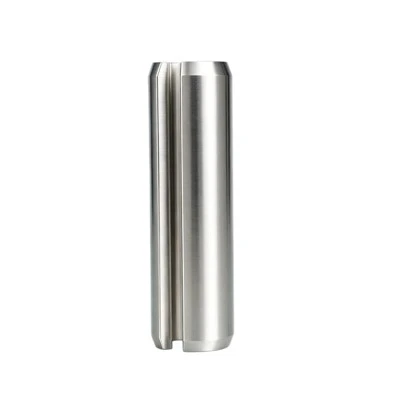
A slotted pin is a hollow cylindrical fastening component made from Carbon steel or stainless steel with a longitudinal slot along the body. During the press-in process, the pin fits tightly against the hole wall due to elastic contraction; once installed, its spring-back force creates an interference fit, thereby exerting radial contact pressure on the hole wall. In mechanical systems, slotted pins are used for positioning, light-duty fastening, and vibration resistance, making them particularly suitable for applications requiring a degree of misalignment or elastic deformation.
Unlike rigid dowel pins, slotted pins rely on controlled elastic compression of the cylinder wall rather than tight grinding tolerance. This makes them suitable for assemblies where hole accuracy is not extremely tight or where repeated assembly cycles are expected.
Structural Behavior and Working Mechanism
The structure of a slotted pin is formed by Rolled from carbon steel or stainless steel into a cylindrical shape, leaving a continuous longitudinal gap. When inserted into a hole slightly smaller than the pin's free diameter, the pin compresses inward and generates outward radial force.
In a typical assembly:
- Hole diameter controls compression level
- Slotted pin provides radial spring force
- Friction between pin and hole wall prevents axial movement
This mechanism allows the pin to absorb dimensional variation in the hole while still maintaining contact pressure. Compared to solid pins, slotted pins tolerate larger tolerance deviations without losing engagement, which reduces machining cost for mating parts.
Material Selection for Industrial Use
The performance of slotted pins depends heavily on material elasticity and fatigue resistance. Common materials include:
- 65Mn / 1070–1095 spring steel: used for standard industrial machinery where repeated compression cycles occur
- Stainless steel 301 / 302: used in humid, chemical, or outdoor environments where corrosion resistance is required
- Phosphor bronze (less common): used in low-friction or electrical grounding systems
Spring steel slotted pins are typically heat-treated to improve yield strength, allowing repeated elastic deformation without permanent shape change. Surface treatments such as zinc plating or phosphate coating are used to reduce corrosion and friction during insertion.
How to Select Slotted Pins Based on Load Conditions
Selection of slotted pins in industrial applications is based on shear load, vibration level, and base material hardness rather than nominal size alone.
Light Load Mechanical Assembly
In low-load systems such as small housings or cover plates:
- Pin diameter is selected based on simple alignment requirement
- Hole material is often aluminum or low-carbon steel
- Slotted pins act mainly as positioning aids rather than load carriers
In these cases, the pin primarily prevents lateral shifting during assembly rather than transmitting high mechanical force.
Medium Load Machinery Systems
In gear housings, mechanical linkages, and actuator systems:
- Pins are exposed to cyclic shear loads from motion
- Hole materials are usually steel or cast iron
- Compression fit must be controlled to avoid hole deformation
Here, slotted pins are chosen to distribute load along the full circumference of the hole, reducing stress concentration compared to rigid pins.
High Vibration Equipment
In engines, pumps, and rotating machinery:
- Vibration frequency may range from 20 Hz to 500 Hz
- Joint interfaces experience continuous micro-movement
- Fasteners may loosen under cyclic loading
Slotted pins are used to maintain friction contact inside the hole, allowing slight elastic movement while preventing complete disengagement of the joint. In these systems, pin fatigue resistance becomes more critical than static strength.
Hole Design and Installation Requirements
Correct hole preparation directly affects slotted pin performance. Unlike dowel pins, slotted pins do not require extremely tight tolerance reaming, but the hole still needs controlled diameter.
Typical installation process:
- Machine the hole to the nominal size according to the pin specifications.
- Ensure hole roundness to avoid uneven compression
- Remove burrs to prevent slot edge damage,Machining the lead-in angle on the mounting face of the hole.
- Insert pin using press or hammer force depending on assembly type
During insertion, the pin compresses radially and the slot closes partially. After installation, it maintains continuous outward force against the hole wall.
If the hole is oversized, friction force decreases and the pin may loosen under vibration. If the hole is undersized, excessive insertion force may cause plastic deformation or cracking at the slot edges.
Performance Behavior in Real Industrial Environments
In actual mechanical systems, slotted pins operate under combined conditions of vibration, temperature variation, and repeated assembly cycles.
Key performance behaviors include:
- Elastic recovery after compression cycles
- Gradual wear at contact interface under micro-motion
- Reduced holding force in soft materials like aluminum
- Stable engagement in steel-to-steel joints under moderate load
- Corrosion resistance across different application scenarios
- Pin shear strength, ensuring no brittle fracture under vibration or impact conditions
In environments with lubrication or contamination (oil, dust, coolant), friction coefficient changes, which directly affects retention force. Engineers often adjust pin diameter or material hardness based on these conditions.
Common Failure Modes and Engineering Considerations
Slotted pin failure is typically gradual rather than sudden. Common failure mechanisms include:
- Fatigue cracking at slot edges due to repeated compression cycles
- Hole enlargement in softer base materials, reducing friction force
- Loss of spring tension after long-term plastic deformation
- Corrosion weakening in humid or chemical environments
To reduce failure risk, engineers often:
- Increase pin wall thickness for high-load joints
- Select stainless steel for corrosive environments
- Use hardened bushings in aluminum or cast iron housings
- Control insertion force during assembly to avoid over-compression
Difference Between Slotted Pins and Other Industrial Pins
Slotted pins are often compared with dowel pins and coiled spring pins:
- Slotted pins: single-slot design, moderate elasticity, used for general fastening and alignment
- Dowel pins: solid rigid structure, used for high-precision positioning with minimal tolerance
- Coiled spring pins: multi-layer coil structure, higher flexibility and fatigue resistance under shock load
Selection depends on whether the system prioritizes alignment accuracy, vibration absorption, or installation tolerance flexibility.
OEM Selection Criteria in Industrial Applications
In OEM mechanical design, slotted pin selection is based on:
- Shear force direction and magnitude
- Hole material hardness and thickness
- Assembly frequency (permanent or serviceable joints)
- Vibration environment intensity
- Manufacturing tolerance capability of mating parts
As an industrial pins manufacturer and OEM supplier, Anhui Pins provides slotted pins with:
- Adjustable diameter and length specifications
- Spring steel or stainless steel material options
- Surface treatments for corrosion and friction control
- Batch production for machinery, automotive, and automation systems
These pins are integrated into mechanical assemblies such as gear systems, machine housings, agricultural equipment, and industrial fixtures, where controlled elasticity and tolerance absorption are required for stable operation.