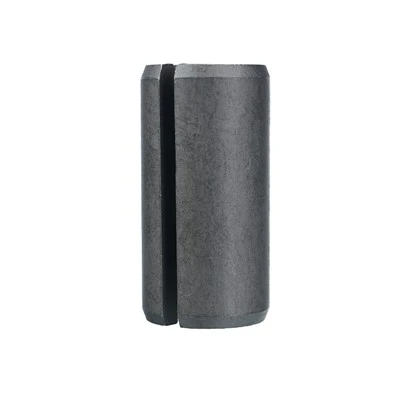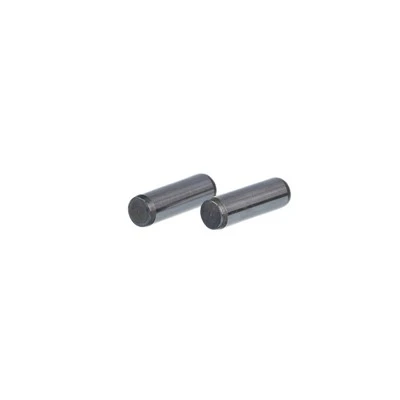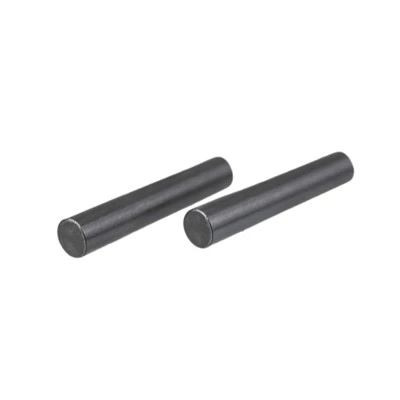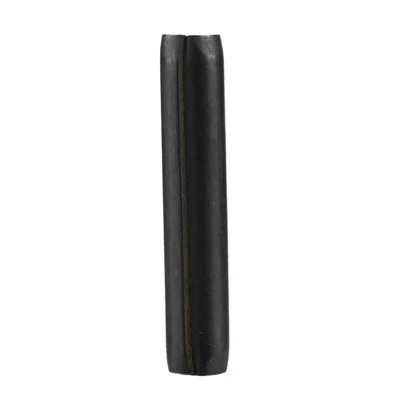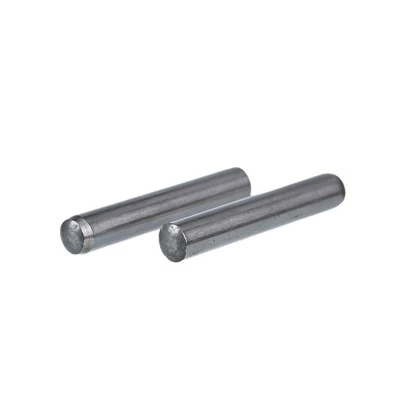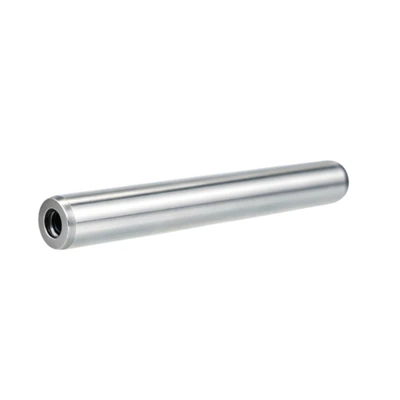
Solid dowel pins are precision cylindrical components used to locate, align, and retain parts in mechanical assemblies. Unlike spring pins, solid dowel pins maintain a fixed cylindrical form and are normally installed into accurately prepared holes. Their performance depends on more than the nominal diameter. Material, hardness, dimensional tolerance, straightness, surface condition, hole size, and fit all affect the final assembly.
For buyers sourcing from a dowel pins manufacturer, understanding these factors helps avoid problems such as loose fits, difficult installation, premature wear, and inconsistent positioning between production batches.
What Are Solid Dowel Pins?
A solid dowel pin is a cylindrical metal pin manufactured to controlled dimensional tolerances. It is commonly used as a locating or alignment element rather than as a general-purpose threaded fastener.
In mechanical assemblies, the pin is installed into a reamed or precision-machined hole. The controlled relationship between the pin diameter and hole diameter determines the required fit. This makes solid dowel pins suitable for applications where component position must remain consistent during assembly, operation, maintenance, or repeated disassembly.
Common applications include:
- Machine components and housings
- Automotive assemblies
- Dies, molds, and tooling
- Jigs and fixtures
- Gear and shaft assemblies
- Industrial automation equipment
- Precision mechanical equipment
For buyers working with a solid dowel pins manufacturer in China, drawings should normally specify the pin diameter, length, material, hardness, tolerance, finish, and applicable standard rather than relying only on a product name.
Solid Dowel Pins vs. Spring Pins
Solid dowel pins and spring pins solve different fastening problems.
A solid dowel pin provides a rigid locating surface and is generally selected when accurate positioning and repeatability are important. A spring pin uses elastic deformation to accommodate the hole and provide retention.
This difference affects both the pin and the hole design.
Solid dowel pins normally require better hole preparation because the fit is determined by controlled dimensions. Spring pins can tolerate certain variations because their body compresses during installation.
For precision locating applications, a dowel pin supplier should be able to review the required fit and recommend a suitable diameter tolerance instead of simply supplying a nominal-size pin.
Which Standards Are Used for Solid Dowel Pins?
Several international and regional standards are used for cylindrical and dowel pin applications. Common specifications include ISO 8734, DIN 6325, ISO 2338, DIN 7, and other corresponding standards.
ISO 8734 is commonly associated with hardened steel dowel pins with controlled dimensions and chamfered ends. DIN 6325 is also widely used for precision hardened dowel pins. The exact standard should be confirmed against the engineering drawing because similar-looking pins can have different dimensional and tolerance requirements.
A professional dowel pins factory should be able to manufacture according to the specified standard and clearly identify any differences between equivalent or related specifications.
For international purchasing, the standard is important because it gives the buyer a common reference for dimensions, tolerances, material requirements, and interchangeability.
Material Selection for Solid Dowel Pins
Material selection should be based on the mechanical and environmental requirements of the assembly.
Hardened Steel
Hardened steel is widely used for precision dowel pins where wear resistance, dimensional stability, and load-bearing capability are required. Through-hardened and ground steel pins are commonly used in tooling, machinery, fixtures, and locating applications.
Stainless Steel
Stainless steel dowel pins are selected when corrosion resistance is more important. They are suitable for equipment exposed to moisture, corrosive environments, or applications where surface corrosion must be controlled.
Alloy Steel
Alloy steel can be considered when the application requires a combination of strength, hardness, and wear resistance. The specific grade and heat-treatment condition should be defined according to the engineering requirements.
When requesting a quotation from a dowel pins manufacturer, buyers should specify the material grade rather than only writing "steel dowel pin." Different steel grades can have significantly different hardness, dimensional stability, and performance after heat treatment.
Why Diameter Tolerance Matters
The nominal diameter alone does not determine whether a dowel pin will work.
For example, a 6 mm dowel pin can require a specific tolerance depending on whether it is being used for locating, alignment, or a removable connection. The corresponding hole tolerance also needs to be considered.
A pin that is too large may create excessive installation force or damage the hole. A pin that is too small may result in unwanted movement and reduced locating accuracy.
This is why experienced custom dowel pins suppliers normally ask for the mating-hole condition, fit requirement, drawing tolerance, or application before confirming a non-standard specification.
For precision assemblies, diameter inspection should be performed with suitable measuring equipment and recorded against the required tolerance range.
Length and End Geometry
Length is another specification that should not be overlooked.
The required length depends on the thickness of the components being aligned, the depth of the receiving holes, and the amount of engagement required. A dowel pin that is too short may not provide sufficient locating engagement. Excessive length can interfere with adjacent components or increase the risk of assembly problems.
Chamfered ends are commonly used to assist insertion and guide the pin into the hole. The chamfer dimensions can be part of the applicable standard or defined separately on a custom drawing.
For custom dowel pins, buyers should include the overall length, diameter, end configuration, chamfer, and tolerance on the drawing.
How to Choose a Dowel Pins Manufacturer
Selecting a supplier should not be based only on unit price. For industrial purchasing, the supplier's ability to maintain dimensional consistency is often more important than a small difference in initial cost.
A suitable dowel pins manufacturer should be able to provide:
- Standard and custom production
The supplier should support recognized standards as well as drawing-based dimensions when standard parts do not meet the application.
- Controlled dimensional tolerances
Diameter, length, straightness, and chamfer dimensions should be controlled during production.
- Material traceability
Material grade should be identifiable and supported by appropriate incoming inspection or material documentation when required.
- Heat-treatment control
For hardened dowel pins, hardness and heat-treatment consistency directly affect wear resistance and dimensional stability.
- Final inspection
Critical dimensions should be verified before shipment, particularly for OEM and repeat-production orders.
- Stable batch production
Buyers ordering thousands or millions of pieces need consistent dimensions between batches, not only acceptable samples.
These points are particularly important when comparing dowel pins suppliers in China, where production capability, inspection standards, and customization support can vary significantly between factories.
Custom Dowel Pins for OEM and ODM Projects
Standard dowel pins are suitable for many applications, but some assemblies require non-standard dimensions or materials.
Custom dowel pins can be produced according to engineering drawings, samples, or defined technical specifications. Typical customization requirements include:
- Non-standard diameters
- Special lengths
- Specific diameter tolerances
- Different materials
- Special hardness requirements
- Modified chamfer dimensions
- Surface treatments
- Special packaging and labeling
For OEM/ODM dowel pins, buyers should provide as much technical information as possible at the quotation stage. A complete drawing reduces the need for repeated confirmation and helps the manufacturer evaluate production feasibility before sampling.
Quality Control for Solid Dowel Pins
Quality control should cover the complete manufacturing chain rather than relying only on final inspection.
A typical inspection process includes incoming material verification, dimensional inspection during production, heat-treatment or hardness verification where applicable, and final inspection before shipment.
For solid dowel pins, critical inspection points normally include diameter, length, straightness, chamfer, surface condition, and hardness when specified.
For large-volume orders, buyers can also request inspection records or agreed sampling requirements. This provides a clearer quality standard for repeat orders and reduces variation between shipments.
Solid Dowel Pins Wholesale: What Should Buyers Confirm?
For wholesale purchasing, price is only one part of the sourcing decision. Before placing a production order, buyers should confirm:
- Exact standard and revision
- Diameter and tolerance
- Length and tolerance
- Material grade
- Hardness requirement
- Surface finish
- Quantity and packaging
- Inspection requirements
- Sample approval process
- Production lead time
- Shipping terms
A dowel pin wholesaler should be able to provide consistent specifications across repeat orders. If the product is used in a production assembly, maintaining the same material, tolerance, and inspection requirements is important for stable assembly performance.
Why Source Dowel Pins in China?
China has a mature industrial fastener supply chain covering raw materials, machining, heat treatment, grinding, surface finishing, inspection, and export packaging. This makes dowel pins in China a practical sourcing option for OEM manufacturers, machinery companies, distributors, and industrial component buyers.
When sourcing from a China dowel pins factory, buyers should compare manufacturing capability rather than relying on trading-company quotations alone. The key questions are whether the supplier controls critical dimensions, supports the required standards, handles custom drawings, and can maintain quality during repeated production.
For companies purchasing top dowel pins for industrial applications, the right supplier is the one that can match the engineering specification with stable production and measurable quality control.
Final Buying Checklist
Before approving a solid dowel pin supplier, confirm five points:
- Specification: Is the diameter, length, tolerance, material, and standard clearly defined?
- Fit: Does the pin match the hole tolerance and required assembly method?
- Material: Is the selected steel or stainless steel grade suitable for the operating environment?
- Quality: Does the manufacturer have a defined inspection process for critical dimensions and hardness?
- Supply: Can the supplier support samples, repeat orders, custom production, OEM/ODM requirements, and the required quantity?
Solid dowel pins are small components, but their dimensional accuracy can directly affect the positioning and repeatability of an entire assembly. For B2B buyers, choosing the right dowel pins manufacturer starts with the engineering specification and ends with consistent production control.